Podman (Rootless-First)
Podman was selected as the underlying engine for its daemonless architecture and rootless execution, isolating application services without root privileges.
A lightweight, single-server PaaS designed for personal home servers and homelabs, focused on essential deployment workflows without the overhead of larger platforms.
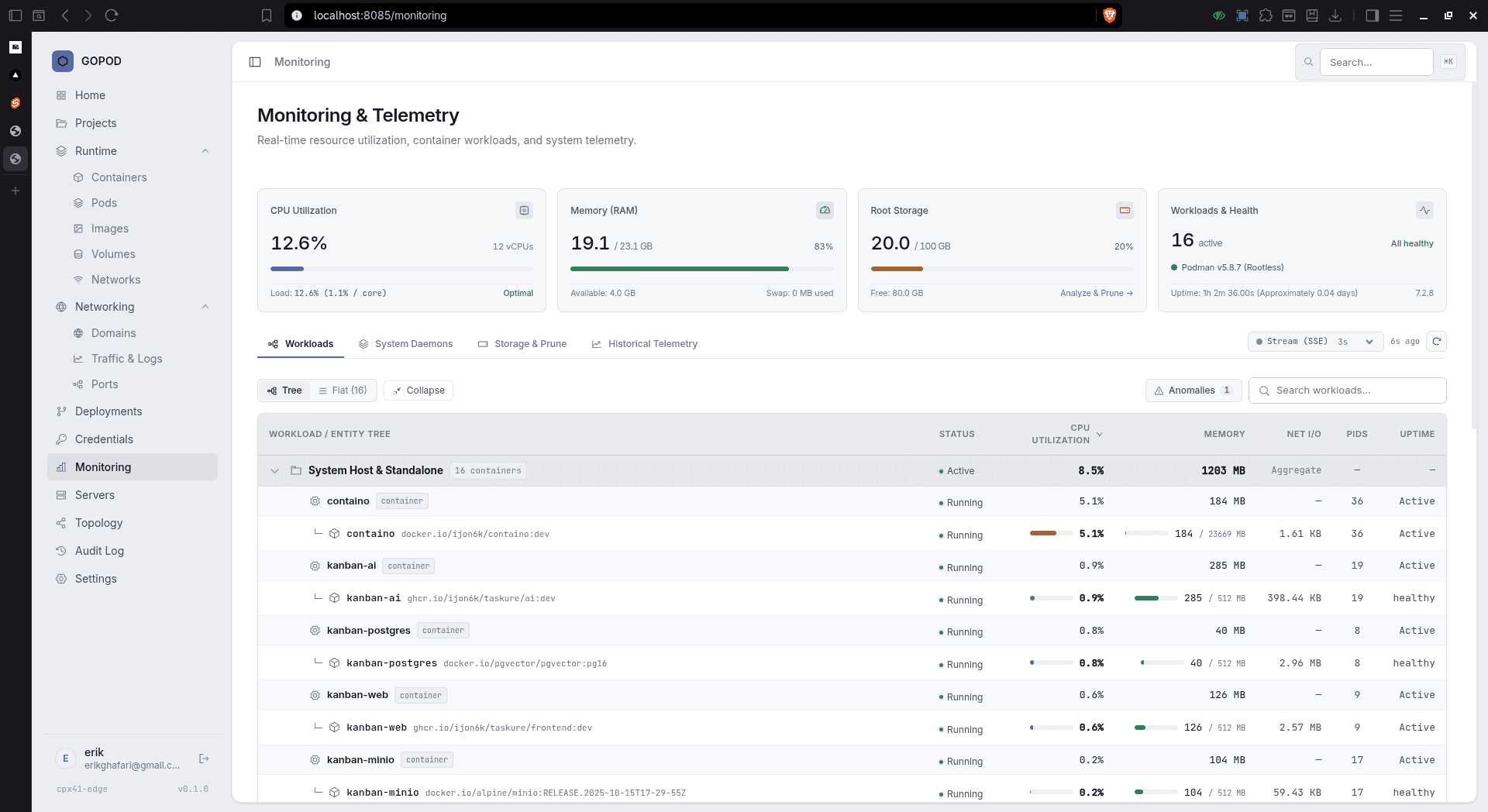
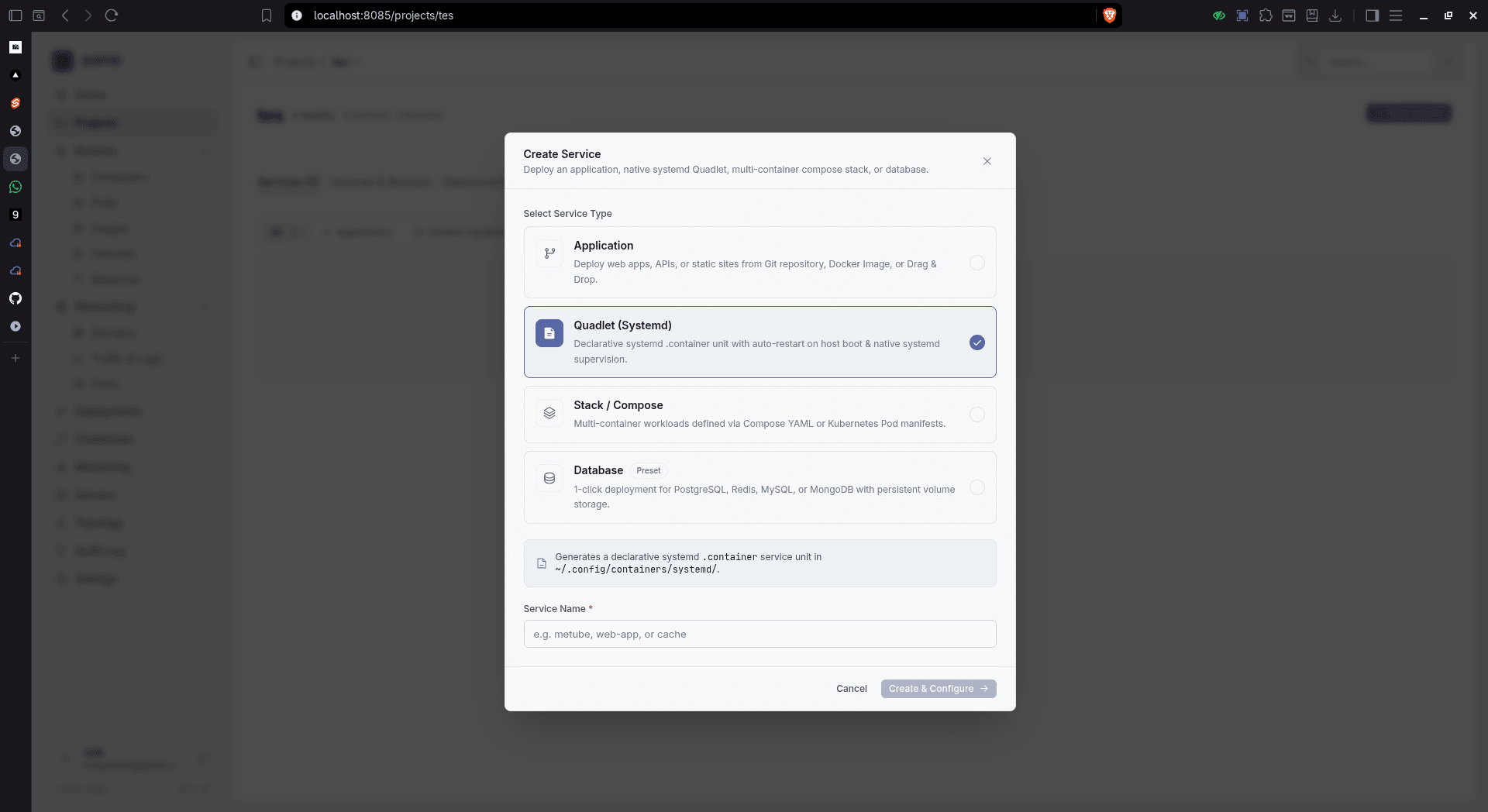
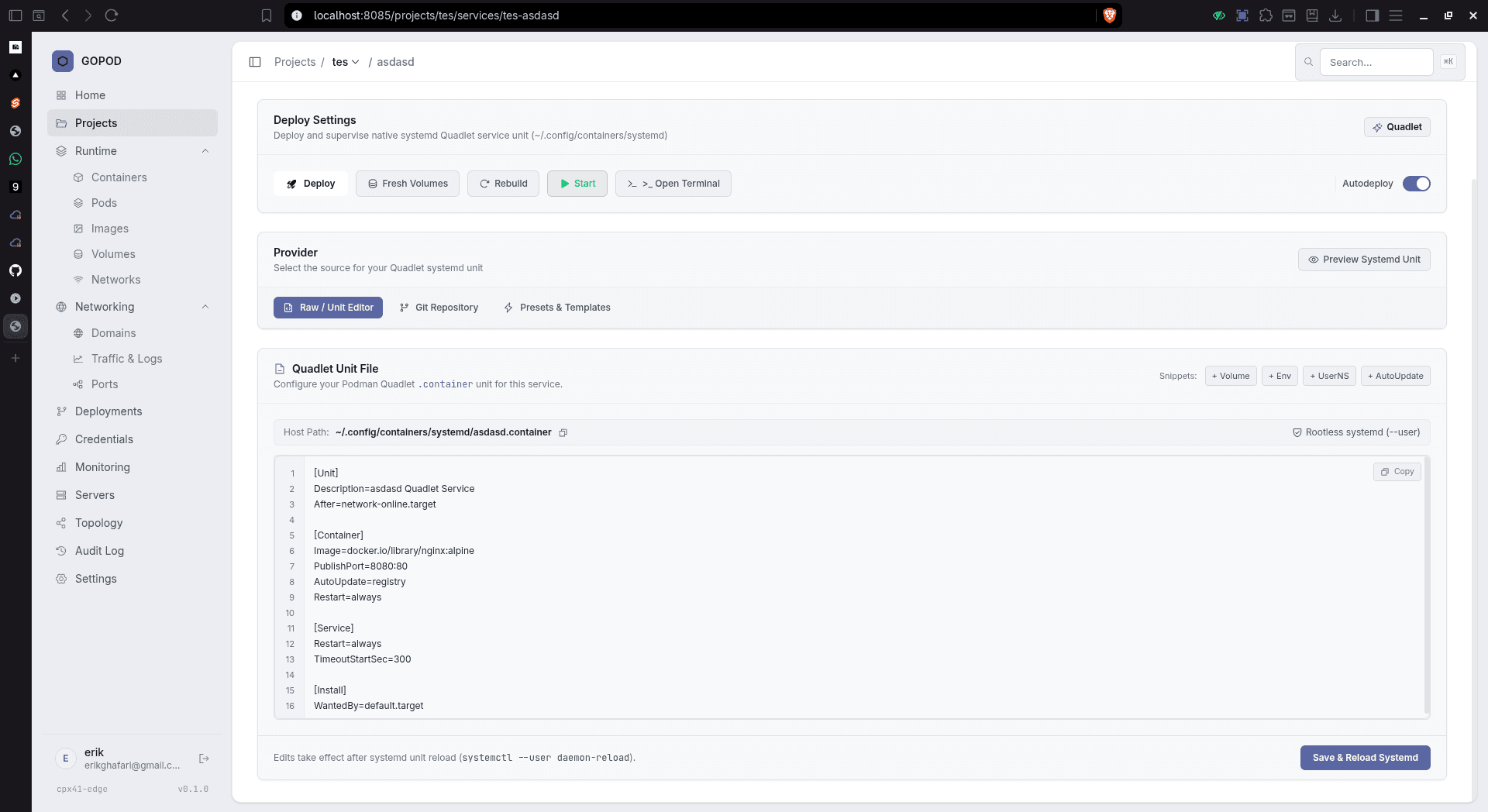
The inspiration for GoPod came from using platforms like Dokploy on personal hardware. The concept of an application-centric deployment workflow is compelling, but existing self-hosted platforms often carry an application stack and control-plane footprint that feels heavy for a personal home server.
Personal servers and homelabs have finite memory and compute. A deployment platform should not tie up substantial RAM just to coordinate services; those resources belong to the actual applications being hosted.
GoPod is not an attempt to compete with broad self-hosted platforms like Coolify or Dokploy, nor does it target enterprise multi-server clusters. It is an exploration of a small, focused PaaS that delivers the essential deployment workflow (Project → Service → Deploy → Domain) with minimal control-plane overhead.
Podman was selected as the underlying engine for its daemonless architecture and rootless execution, isolating application services without root privileges.
Exploring native Linux service supervision via Quadlet files, letting systemd manage container dependencies, auto-starts, and health policies directly.
Caddy handles automatic HTTPS certificate management and dynamic reverse proxying, routing incoming domains straight to application ports.
A compiled Go daemon handles container orchestration, Quadlet generation, and Caddy routing APIs with low memory usage and fast execution.
A lean, responsive web interface built with SvelteKit, delivering a focused deployment dashboard without client-side bundle bloat.
Fedora provides the development baseline for testing native rootless namespaces, SELinux policies, and modern cgroups v2 boundaries.
While I could expand into multi-user or team features in the future, my priority right now is solving my own immediate need: a lean, essential tool for a home server with minimal RAM.
Keeping the scope simple and essential allows me to deeply learn Podman internals, rootless container mechanics, and clean Linux systems architecture.
GoPod is currently in the product, UX, and architectural design phase. Defining service boundaries and user flows upfront ensures the system remains lightweight by design.