SvelteKit + Go
A SvelteKit frontend works with a Go backend, with PostgreSQL handling the application data.
A self-hostable community portal for sharing projects, managing hosting requests, and showing the state of a small shared server.
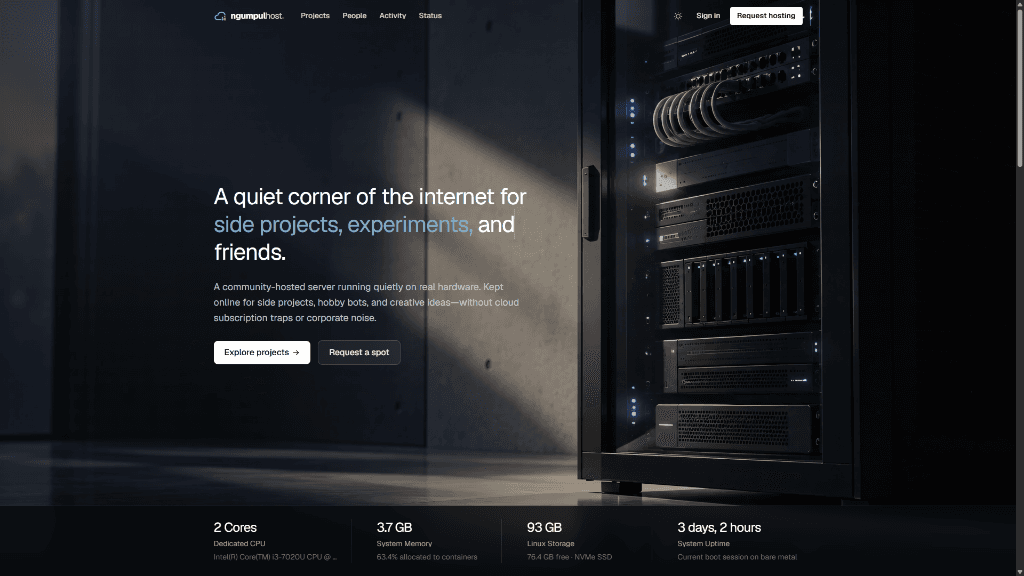
Ngumpul Host started as a small project around my home server.
The idea is to have one place where people can see the projects running on the server, learn who is behind them, and request a place to host their own projects.
It is not meant to be a full hosting platform. I wanted to keep the infrastructure simple and make the application more about the people, projects, and things running on the server.
A SvelteKit frontend works with a Go backend, with PostgreSQL handling the application data.
Projects have their own pages, metadata, members, activity, and hosting information.
Projects are deployed manually on the server and then registered in Ngumpul Host.
The application runs on a Linux server with Docker and Nginx handling deployment and routing.
The platform keeps a lightweight record of server and project availability.
Project state and service availability are treated separately, so a suspended project is not simply treated as an offline one.
The project grew from a simple project list into a place for managing projects, people, and hosting requests.
A lot of the interesting parts were about figuring out how different pieces of the system should fit together.
Keep the scope small and avoid turning it into a full hosting platform.